

Walking into a rehearsal only to realize no one knows who walks in first or what song plays when is a stressor you can easily avoid. Most couples start by picking their readings or vows, but the actual logistics of the processional and the transitions between segments are what make a ceremony feel seamless.
When the pacing is off, guests start checking their watches or missing the emotional weight of the moment. This Wedding Ceremony Order of Events (Simple Step-by-Step Guide) helps you map out those transitions so the focus stays on the commitment you are making.
A clear structure provides a sense of calm for your wedding party and ensures your photographer is in the right spot for every major milestone. Once the skeleton of the ceremony is set, you can layer in the personal details that make it yours.
The Processional and Opening Moments
The processional is the literal start of the wedding, and it sets the tone for everything that follows. Usually, the officiant, the groom, and the best man enter first, often from a side door or a quiet entrance to take their places at the front. Following them, the wedding party enters in a specific order, typically starting with the bridesmaids and groomsmen paired up or walking solo. The maid of honor and best man are the last of the party to enter before the flower girl and ring bearer make their way down the aisle.
This is where the music choice matters most. You want a steady tempo that encourages a natural walking pace rather than a frantic dash. Many couples choose one song for the wedding party and a distinct, separate track for the grand entrance of the bride or the couple. This musical shift acts as a cue for guests to stand and creates a clear boundary between the arrival of the party and the start of the ceremony.
Once everyone is at the altar, the officiant usually offers a brief word of welcome. This is a practical moment to ask guests to silence their phones or mention that the ceremony is “unplugged” if you prefer not to see a sea of screens in your professional photos. It grounds everyone in the space and signals that the formal event has officially begun.
The Processional and Opening Moments
The processional is the literal start of the wedding, and it sets the tone for everything that follows. Usually, the officiant, the groom, and the best man enter first, often from a side door or a quiet entrance to take their places at the front. Following them, the wedding party enters in a specific order, typically starting with the bridesmaids and groomsmen paired up or walking solo. The maid of honor and best man are the last of the party to enter before the flower girl and ring bearer make their way down the aisle.
This is where the music choice matters most. You want a steady tempo that encourages a natural walking pace rather than a frantic dash. Many couples choose one song for the wedding party and a distinct, separate track for the grand entrance of the bride or the couple. This musical shift acts as a cue for guests to stand and creates a clear boundary between the arrival of the party and the start of the ceremony.
Once everyone is at the altar, the officiant usually offers a brief word of welcome. This is a practical moment to ask guests to silence their phones or mention that the ceremony is “unplugged” if you prefer not to see a sea of screens in your professional photos. It grounds everyone in the space and signals that the formal event has officially begun.
Common Processional Order
- Offiicant and Groom
- Groom’s Parents
- Bride’s Mother
- Bridesmaids and Groomsmen
- Maid of Honor and Best Man
- Ring Bearer and Flower Girl
- The Bride and Father (or chosen escort)
The Readings and The Charge to the Couple
After everyone is seated, the ceremony moves into the “Liturgy of the Word” or the sharing of sentiment. This usually starts with a brief address by the officiant about the meaning of marriage. If you are having a secular ceremony, this is often where a friend or family member might step up to share a poem, a book excerpt, or a meaningful story. These readings provide a necessary change in pace and allow you to involve people who aren’t in the official wedding party.
The “Charge to the Couple” is a traditional element where the officiant speaks directly to you about the gravity and joy of the commitment. Even in the most modern ceremonies, this serves as a transition from the general celebration into the specific legal and emotional promises you are about to make. It is the moment where the room usually goes very quiet.
If you have multiple readings, it is a good idea to space them out. Having three people read back-to-back can feel a bit like a lecture. Most planners suggest one reading at the beginning and perhaps one after the vows to give the ceremony a balanced rhythm. This keeps the energy moving toward the main event: the vows and the exchange of rings.
Vows and the Exchange of Rings
This is the heartbeat of the entire day. Whether you are reciting traditional religious vows or reading words you wrote on a crumpled piece of paper at 2:00 AM, this is why everyone is there. There are two parts to this: the “Declaration of Intent” (the “I do” part) and the Vows themselves (the “I promise” part).
The Declaration of Intent is often required for the marriage to be legal in many jurisdictions. It is the public affirmation that you are here of your own free will. Following this, you exchange your personalized or traditional vows. If you are writing your own, aim for one to two minutes per person. Anything longer tends to lose the audience, and anything shorter can feel a bit rushed for such a big moment.
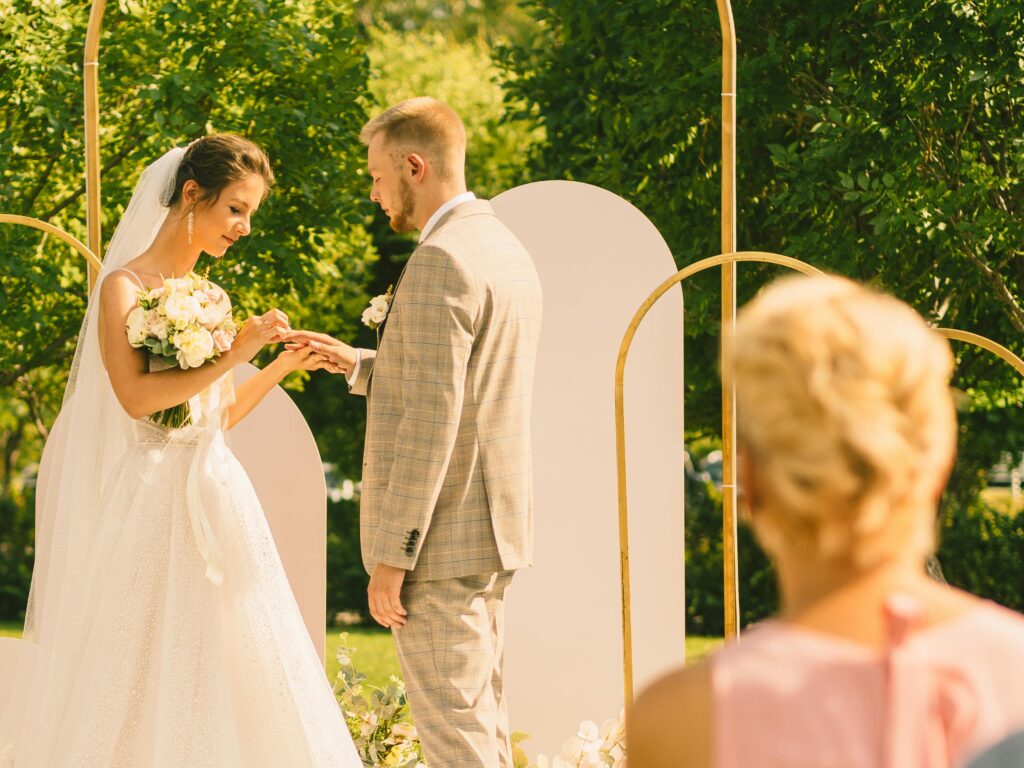
The ring exchange follows immediately. It is a physical symbol of the words you just spoke. Usually, the best man or maid of honor will have the rings ready. A common mistake here is trying to force a ring onto a finger that has swollen slightly due to heat or nerves. A quick tip: just slide it to the knuckle and let the wearer move it the rest of the way later. It saves a lot of awkward tugging during a very silent moment.
Vow and Ring Logistics
| Element | Typical Duration | Who is Involved |
| Declaration of Intent | 1–2 Minutes | Couple & Officiant |
| Exchange of Vows | 3–5 Minutes | Couple |
| Ring Exchange | 2 Minutes | Couple & Ring Bearer/Best Man |
| Unity Ceremony (Optional) | 3–5 Minutes | Couple & Family |
Unity Traditions and Final Blessings
Many couples choose to include a unity ceremony after the rings are exchanged. This could be a sand pouring, a candle lighting, or a hand-fasting tradition. While these are beautiful, they do require extra setup. You will need a small table at the front and all the necessary supplies ready to go. If there is music during this part, ensure the musicians know to play until you are finished and back in your original standing positions.
The final blessing or closing remarks follow the unity ceremony. This is where the officiant wraps up the themes of the day and offers well-wishes for the future. It is a brief section, usually no more than three or four sentences, that prepares the guests for the big finale. This is also when the officiant will usually ask the couple to join hands for the final pronouncement.
The pronouncement is the “I now pronounce you…” moment. It is the legal and social climax of the ceremony. After this, the kiss happens. One practical tip: hold the kiss for at least three seconds. This gives your photographer enough time to catch the focus and get the “hero shot” of the day without you having to do it twice.
The Recessional
The recession is the literal reverse of the processional, but with much more energy. The music should be upbeat, loud, and celebratory. You and your spouse will lead the way out, followed by the flower girl and ring bearer, then the maid of honor and best man, and finally the rest of the wedding party.
One thing that gets forgotten until the last minute is where the wedding party goes once they reach the end of the aisle. You don’t want a traffic jam at the back of the ceremony space. Make sure you have a clear path to a private room or a designated spot away from the guests so you can have a few minutes of quiet together before the photos or the cocktail hour begins.
While the party exits, the officiant will usually remain at the front to give guests instructions on where to go next. Whether it is moving to a different floor for cocktails or heading to a separate reception venue, this “logistics announcement” is vital for keeping the day on schedule.
Quick Decisions Box
- Seating: Will guests be allowed to sit anywhere, or is there a “bride’s side” and “groom’s side”?
- Phones: Are you okay with guests taking photos, or do you want an unplugged ceremony?
- Officiant Style: Do you want them to be funny and lighthearted, or formal and serious?
- The Kiss: Have you practiced a “dip” or a standard kiss for the photo?
A Realistic Ceremony Timeline
Most ceremonies land in the 20 to 30-minute range. If you go under 15 minutes, guests who traveled a long way might feel like they missed it. If you go over 45 minutes, you risk people getting restless or uncomfortable, especially in outdoor settings.
Example Scenario: 4:30 PM Ceremony Start
- 4:00 PM: Music starts playing as guests arrive and are seated.
- 4:30 PM: The processional begins (Groom, Wedding Party, Bride).
- 4:38 PM: Opening remarks and welcome.
- 4:42 PM: First reading (usually a poem or scripture).
- 4:45 PM: Offiicant’s address/Charge to the couple.
- 4:50 PM: Exchange of Vows and Rings.
- 4:55 PM: Unity Ceremony or second reading.
- 4:58 PM: Final blessing and Pronouncement.
- 5:00 PM: The Recessional and guest dismissal.
Common Mistakes to Avoid
One of the biggest errors is not doing a full rehearsal of the walking order. People often think “we’ll just walk down a line,” but spacing is difficult to get right in the moment. If the bridesmaids walk too close together, it looks bunched up in photos. If they are too far apart, the ceremony feels like it is dragging before it even starts.
Another issue is the “Officiant Photo-Bomb.” During the kiss, many officiants stay standing right between the couple, which means they are in every single photo of that moment. Ask your officiant to step to the side right before they say “You may now kiss.” It makes the photo much cleaner and focuses entirely on the two of you.
Finally, don’t forget the marriage license. It seems obvious, but in the rush of hair, makeup, and ties, the actual legal paperwork often stays in a hotel room or a car. Assign one person—usually the best man or the maid of honor—to be the “License Guard.” Their only job is to make sure that paper is at the ceremony and signed immediately afterward.
Wedding Ceremony Checklist
- Marriage license is on-site and pen is available.
- Rings are with the best man or maid of honor (not the ring bearer).
- Vow books or cards are printed (don’t rely on a phone screen).
- Water is available for the couple and officiant behind the altar.
- Reserved signs are placed on the first two rows for family.
- Musicians have their cues for processional and recessional.
- Microphones are tested and batteries are fresh.
- A plan is in place for guest transition to the next location.
If You’re Stuck, Do This
If the planning feels overwhelming or you are arguing over which traditions to keep, go back to the “Standard Three.” A ceremony only needs three things to be successful: a welcome, the vows, and the pronouncement. Everything else—the readings, the unity candles, the five-minute solo—is optional. If a specific element is causing stress or feels performative rather than personal, cut it. Your guests are there to see you get married, not to watch a variety show. Start with those three pillars and only add what actually matters to you.
A Quick Note on Real-life Planning
This framework is a standard starting point, but every wedding is a bit of a moving target. Local laws might require specific wording, and different cultures or religions have their own essential sequences that should take priority. Use this guide to build your basic flow, but always check with your specific venue and officiant to see if they have requirements that might shift your timeline. The best ceremony is the one that feels like a reflection of your actual relationship.
