

I was a bridesmaid in a wedding about three years ago where the ceremony was held in a gorgeous open field during the peak of summer. It looked like a dream on Pinterest. In reality, the couple forgot to check where the sun would be at 4:00 PM. The groom spent twenty minutes squinting so hard he looked angry in every single photo, and the bride actually had a bead of sweat roll down her nose right as she said “I do.” By the time they kissed, half the guests were using their programs as makeshift fans just to keep from passing out.
We spend so much time obsessing over the “big” things like the dress, the flowers, and the guest list that the actual logistics of the ceremony often get pushed to the back burner. We assume that because we’ve seen a hundred ceremonies on TV, it will just sort of work itself out. But the ceremony is where the most moving parts are. It is the part with the most nerves, the most family dynamics, and the most unpredictable elements like weather and microphones.
If you want your ceremony to be remembered for the beautiful vows rather than the technical glitches or the uncomfortable seating, you have to look at the boring details. Here are the most common mistakes I see brides make and, more importantly, how you can sidestep them so your ceremony actually feels like the dream you’ve been picturing.
1. The “Too Long” Ceremony
We have all been there. You are sitting in a hard wooden pew or a folding chair on a lawn, and the officiant is on their tenth minute of a metaphor about marriage being like a lighthouse. You look around, and you can see the guests starting to glaze over.
Unless you are having a full religious mass, most modern American ceremonies should land somewhere between twenty and thirty minutes. That is the “sweet spot” where it feels significant and weighty but doesn’t start to feel like a lecture. When you are planning your script, time it out. Read it out loud at a normal speaking pace. If you find yourself getting bored while reading your own ceremony script, your guests definitely will too.
2. Not Testing the Sound System
There is nothing that kills the vibe of a romantic ceremony faster than a microphone that keeps cutting out or a high pitched screech of feedback right in the middle of your vows. Or, even worse, a ceremony where the guests in the back can’t hear a single word.
If you are getting married outdoors, you absolutely must have a microphone. Even if you think you have a loud voice, the wind and the open space will swallow your words. Make sure your officiant has a lapel mic and that there is a handheld mic on a stand for anyone doing readings. Do a full sound check at the venue during your rehearsal. Walk to the very last row of chairs and make sure you can hear clearly. If you can’t hear the music or the speaking, your guests are going to feel disconnected from the whole experience.
3. Ignoring the “Sun and Shade” Factor
I mentioned this in the intro, but it is a huge mistake that happens all the time. If you are getting married outside, you need to know exactly where the sun will be at the start of your ceremony.
You don’t want your guests facing directly into the sun, because they won’t be able to see you. You also don’t want the sun to be directly behind you, because you will appear as a dark silhouette in all your professional photos. Ideally, you want the sun to be to the side or behind the guests. If the area is totally open, consider providing parasols or sunglasses as favors. Your photographer will thank you, and your guests won’t leave with a headache from squinting for half an hour.
4. The Unrehearsed Processional
A lot of couples think they can just tell people the order of the walk and it will be fine. Then the wedding day comes, and the flower girl gets scared, the bridesmaids are walking way too fast, and the music ends three minutes before the bride even reaches the aisle.
The rehearsal isn’t just for the officiant to practice the words. It is for the “pacing.” You need to practice the walk with the actual music you plan to use. Tell your wedding party to count to ten between each person. This creates space for the photographer to get a clear shot of everyone and keeps the entrance from feeling like a race. Also, make sure everyone knows exactly where to stand once they get to the front. You don’t want a huddle of people shuffling around trying to find their “spot” while you’re trying to make your grand entrance.
5. Forgetting the “Unplugged” Announcement
We live in a world where everyone wants to capture the moment on their phone. But there is nothing more distracting than walking down the aisle and seeing a wall of glowing screens instead of the faces of your friends and family. Not to mention, guests leaning into the aisle with their phones often ruin the professional photos you paid thousands of dollars for.
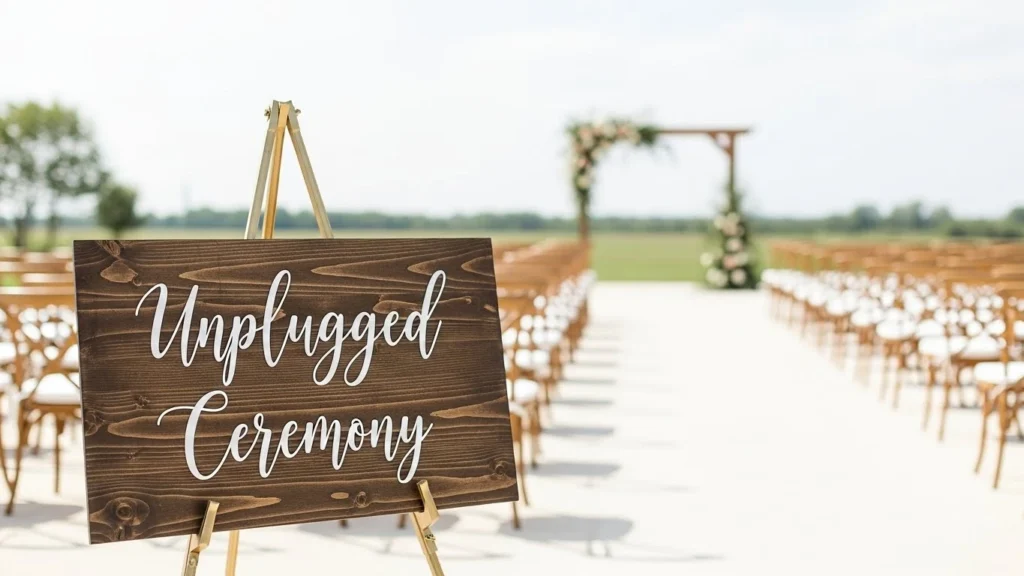
The mistake is assuming people will just “know” to be respectful. They won’t. You need to have your officiant make a clear announcement before the processional starts. Have them say something like, “The couple invites you to be fully present and put your phones away until after the ceremony.” Put it on a sign at the entrance too. People usually don’t mind being told, but they need the reminder to unplug and stay in the moment.
6. Not Hydrating the Wedding Party
Standing at the front of a room in a heavy dress or a suit, under hot lights or the sun, while you are nervous and haven’t eaten much is a recipe for fainting. It happens more often than you think.
Make sure everyone in the wedding party drinks a big glass of water right before they walk out. Also, tell your bridesmaids and groomsmen to “soften their knees.” When people get nervous, they tend to lock their legs straight, which restricts blood flow and leads to lightheadedness. If someone starts feeling woozy, they should have permission to sit down immediately. It is much better to have a bridesmaid sit in the front row than to have her hit the floor mid-ceremony.
7. The “Vow” Panic
If you are writing your own vows, do not wait until the morning of the wedding to finish them. I have seen brides scribbling on napkins while getting their hair done, and it just adds a level of stress you don’t need.
Write them at least two weeks in advance. Print them out on a clean piece of cardstock. Do not try to read them off your phone. Phones look terrible in photos, the screen can go dark right when you need it, and notifications might pop up while you’re trying to be sentimental. Giving the paper to your officiant or the best man to hold until the right moment ensures you won’t lose it in the chaos of the morning.
8. The Lack of a “Plan B” for Weather
If you have an outdoor ceremony, you must have a rain plan that you actually like. A lot of brides pick a “Plan B” that is just a cramped hallway or a basement and then they spend the whole week of the wedding crying because the forecast looks grey.
Mistake: Hoping it won’t rain. Strategy: Embracing the backup. If you have to move inside, make sure you have a plan for the decor and the seating that still feels special. If the backup plan feels like an afterthought, you will feel disappointed. If you have a plan you actually like, the weather won’t have the power to ruin your mood.
Final Thoughts
The perfect ceremony isn’t the one where nothing goes wrong. It is the one where the couple is relaxed enough to handle whatever happens. If the ring bearer drops the rings, laugh it off. If a car honks in the street during your quiet moment, smile at each other.
By taking care of these logistical “boring” bits ahead of time, you are giving yourself the freedom to actually be present. You won’t be wondering if the guests can hear you or if your bridesmaid is about to pass out. You’ll just be looking at your partner and realizing that you’re finally doing the thing. Take care of the details now so you can take care of your heart on the big day.
