

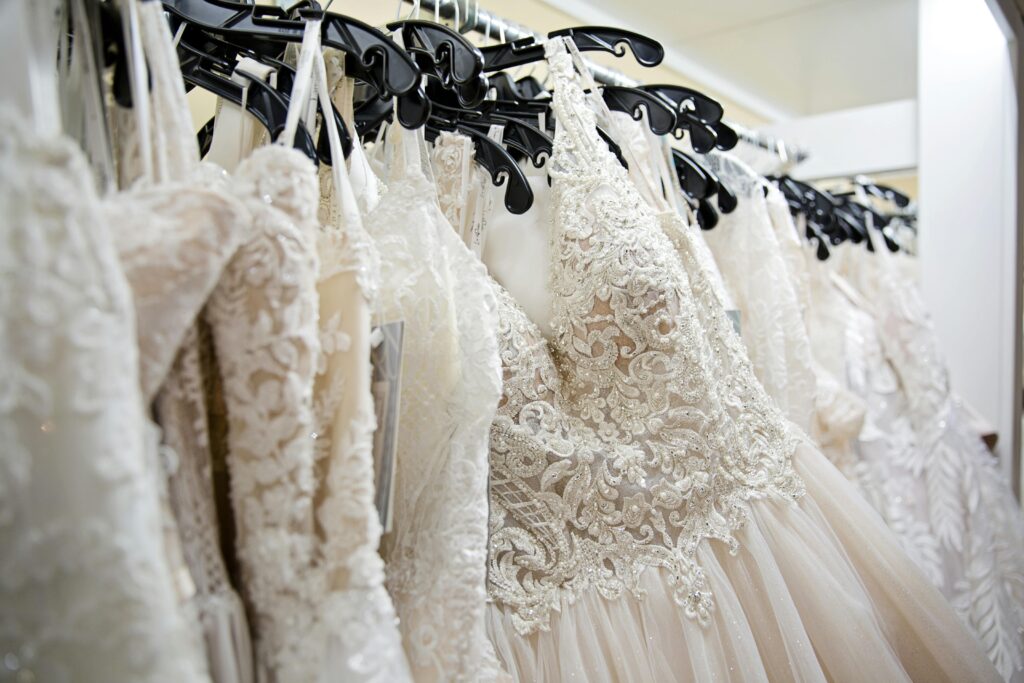
I remember sitting on the floor of my best friend’s living room, surrounded by about twenty open tabs on my laptop and three different bridal magazines. We were trying to figure out the difference between a “modified trumpet” and a “fit and flare.” Honestly, after an hour of looking at white fabric, it all started to look like a giant cloud of confusion. I felt like I needed a degree in architecture just to buy a dress.
Most of the guides you find online are way too stiff. They use all this industry jargon that makes you feel like you’re back in a high school history class. But here is the thing. You just want to know what these shapes actually look like on a human body and how they’re going to feel when you’re trying to eat dinner. Whether you have been dreaming of a princess moment since you were five or you’re just trying to find something that doesn’t make you look like a marshmallow, I’ve got you. Let’s break down the main wedding dress silhouettes in plain English.
The Ball Gown: The Classic Fairytale
If you want to feel like royalty, this is the one. Think Cinderella. The ball gown has a very fitted bodice (the top part) and a massive, full skirt.
This style is great because it creates a really dramatic waistline. If you are someone who wants to hide your lower half or if you just love the idea of a “big” moment, you can’t beat a ball gown. Just a heads up though. These dresses can be heavy. You are carrying a lot of fabric around, so make sure you’ve got some leg strength for the dance floor.
The A-Line: The Universal Best Friend
If the ball gown is a bit too much drama for you, the A-line is likely your soulmate. It is called an A-line because the shape of the dress literally looks like a capital letter A. It is fitted at the top and then gradually flares out toward the ground.
The reason everyone loves an A-line is that it looks good on basically every body type. It’s not as puffy as a ball gown, but it still gives you that bridal “swish” when you walk. It is also usually way lighter and easier to move in, which is a huge plus if you’re planning an outdoor wedding.
The Mermaid: For the Drama
The mermaid silhouette is all about the curves. This dress is fitted very tightly through the chest, waist, and hips, and then it “pops” out right around the knees.
It is a stunning, sexy look, but I have to be real with you. It can be a little hard to walk in. Because it’s so tight around your knees, you might find yourself doing a bit of a penguin waddle. If you’re planning on doing a choreographed first dance with a lot of footwork, definitely do a test run in this style first.
The Trumpet: The Mermaid’s Chiller Sister
A lot of people get the trumpet and the mermaid confused. The main difference is where the flare starts. While the mermaid waits until the knee to branch out, the trumpet starts flaring out around mid-thigh.
This might seem like a small detail, but it makes a big difference in how much you can move your legs. It still gives you that hourglass shape, but it’s a little more forgiving if you actually want to sit down and breathe during your reception.
The Sheath: Sleek and Simple
The sheath dress (sometimes called a column dress) follows the natural line of your body from head to toe. It doesn’t flare out at all.
This is perfect for the minimalist bride or for a beach wedding where you don’t want to be dragging ten pounds of tulle through the sand. It is very chic and modern. One thing to keep in mind is that because there isn’t much structure to the skirt, the fabric usually skims right over your body. You might want to invest in some really good seamless undergarments for this one.
The Empire Waist: The High-Waisted Hero
The empire dress has a waistline that sits right under the bust. From there, the rest of the fabric flows straight down to the floor.
This style is a total lifesaver if you don’t want anything tight around your stomach or hips. It is very popular for “boho” style weddings because it feels very ethereal and airy. It is also the go-to choice for pregnant brides because it leaves plenty of room for a growing bump without sacrificing style.
The Tea-Length: The Vintage Vibe
If you aren’t feeling the whole floor-length gown thing, look at tea-length dresses. These hit somewhere between the knee and the ankle.
They have a very 1950s, Audrey Hepburn kind of feel. They are amazing for casual weddings, courthouse ceremonies, or even as a second “party” dress for the reception. Plus, you get to show off your shoes, which is a major win if you spent a lot of money on a killer pair of heels.
A Note on Necklines and Sleeves
While the silhouette is the overall shape, the neckline is what people see in all your close-up photos.
- Sweetheart: Shaped like the top of a heart. It is very romantic and great for showing off a necklace.
- V-Neck: Very elongating and modern. It can be a tiny bit of a plunge or a very deep “V.”
- Halter: This wraps around the neck. It’s great if you want to show off your shoulders and back.
- Off-the-Shoulder: Super trendy and feminine, though as we discussed before, it can limit your arm movement.
Final Thoughts
Don’t get too hung up on the “rules” of what you’re supposed to wear for your body shape. I have seen petite brides rock massive ball gowns and curvy brides look incredible in sleek sheaths. The best way to choose is to go into a shop with an open mind. Try on one of each style even if you think you’ll hate it. Sometimes the dress that looks like a “maybe” on the hanger ends up being the one that makes you feel like the most confident version of yourself.
