

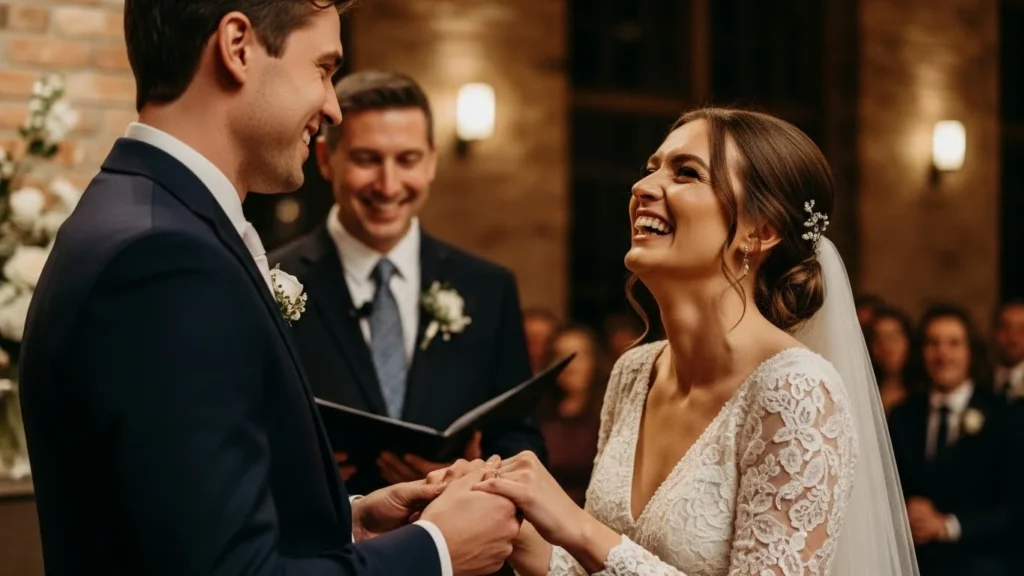
I was at a wedding last October where the officiant literally mispronounced the groom’s name. Not just once, but three times. It was one of those ceremonies where you could tell the couple had just picked “Option B” from a PDF of standard scripts. The words were fine, I guess, but they were hollow. They talked about marriage as this big, lofty, abstract concept, but they didn’t talk about the two people standing right there. I felt like I was watching a generic movie instead of a real life milestone.
That is my biggest fear for any bride. You spend months picking out the perfect flowers and making sure the seating chart won’t cause a family feud, only to have the most important twenty minutes of your life feel like a legal transaction. We have all been to those ceremonies where the guests are secretly checking their watches or trying to remember if they turned the oven off.
It doesn’t have to be that way. A ceremony that feels “personal” isn’t about being a professional writer or doing something wild like skydiving into the altar. It is about removing the “clutter” of what you think a wedding should sound like and replacing it with the reality of who you two actually are. If you want your guests to walk away feeling like they just witnessed something sacred and real, here is how you move away from the script and toward the heart.
1. Stop Thinking Like a Poet
The biggest mistake people make when trying to personalize their ceremony is trying to sound like a Shakespearean sonnet. If you don’t use words like “henceforth” or “betwixt” in your everyday life, do not put them in your wedding ceremony.
When you use language that feels too formal, you create a distance between yourself and your partner. You end up performing instead of communicating. Talk to each other like you talk on a Tuesday night on the couch. If you have a nickname for each other, use it. If you have a specific way of saying “I love you” that involves a joke about the dishes, include it. The more the words sound like they actually came out of your mouth, the less “scripted” the whole thing will feel.
2. Interview Your Officiant
Whether you are using a religious leader, a professional celebrant, or your best friend from college, you need to have a real conversation with them before they start writing. Don’t just give them your names and the date.
Give them some “flavor” to work with. Tell them the story of your worst date. Tell them about the moment you realized you wanted to marry this person. Tell them what your partner does that drives you crazy in a cute way. A good officiant will weave these tiny, specific details into the ceremony. When the guests hear a story they recognize, or a detail that feels “so them,” they lean in. It transforms the audience from passive observers into active participants in your story.
3. Change the Structure
Most people follow the “Welcome, Reading, Vows, Rings, Kiss” format because they don’t know they’re allowed to change it. While that structure works, it can feel a bit like a checklist.
Think about how you can break up the flow to make it feel more like a conversation. Maybe you want to start the ceremony by walking in together. Maybe you want to have a moment of silence for loved ones at the very beginning instead of the end. I once saw a ceremony where the couple invited their parents to come up and give them a “blessing” before the vows even started. It broke the “performer vs audience” wall immediately. Don’t be afraid to move things around until the rhythm feels right to you.
4. The Power of the “Inside Joke”
There is a common piece of advice that says you should keep your ceremony “universal” so everyone understands it. I actually disagree. A wedding is the one time where you are allowed to be a little bit insular.
If you include a small reference to your favorite show, or a joke about how you both hate cilantro, it makes the ceremony feel intimate. It signals to your guests that they are being let into your inner circle. You don’t have to explain every joke. The people who know you will get it, and the people who don’t will just see how much you make each other laugh. That laughter is what breaks the tension of a “scripted” moment and makes it feel human.
5. Write “Real” Vows
I know we talk about vows a lot, but they really are the soul of the personalization. If you use the standard “to have and to hold” lines, that is perfectly fine, but consider adding a few personal promises at the end.
A “real” vow isn’t just a promise to love someone forever. It is a promise to be a teammate. “I promise to always tell you when there is spinach in your teeth” is just as holy as “I promise to be faithful.” Why? Because it’s real. It’s what marriage actually looks like. When you mix the big, serious promises with the small, daily ones, you create a ceremony that feels grounded in reality rather than a fairytale.
6. Involve Your Guests in a Meaningful Way
Personalization doesn’t just have to come from you and your partner. You can use your guests to change the energy of the room.
One simple way to do this is to have a “community vow.” Ask your officiant to ask the guests, “Do you promise to support this couple, to host them for dinners, to hold them up when things are hard, and to celebrate their wins?” Having a hundred people yell “We do!” is a powerful, unscripted moment that creates a huge amount of warmth in the room. It reminds everyone that they aren’t just there to watch a show, they are there to be your village.
7. Embrace the Imperfect
This is the most important tip of all. A “scripted” ceremony is one where everything goes perfectly according to plan. A “personal” ceremony is one where you might trip over a word, or your flower girl might decide to sit down in the middle of the aisle, or you might start crying so hard you have to take a second to breathe.
When those things happen, don’t try to “fix” them or get back on track immediately. Lean into them. Laugh about it. If the wind blows your veil into your face, let your partner tuck it back. Those unscripted, “messy” moments are usually the ones that people remember the most. They show that you are two real people having a real experience. If you are too focused on sticking to the script, you miss the actual magic of the moment happening right in front of you.
Final Thoughts
Your wedding ceremony should be a reflection of the life you have already built together. It should feel like a warm hug, not a formal lecture. By using your own words, involving your favorite people, and being willing to let things be a little bit imperfect, you can create a day that feels entirely your own.
Don’t let anyone tell you that there is a “right” way to get married. The only right way is the way that makes you look at your partner and think, “Yeah, this is exactly where I’m supposed to be.” Take the script, use it as a guide, and then don’t be afraid to color outside the lines.
