

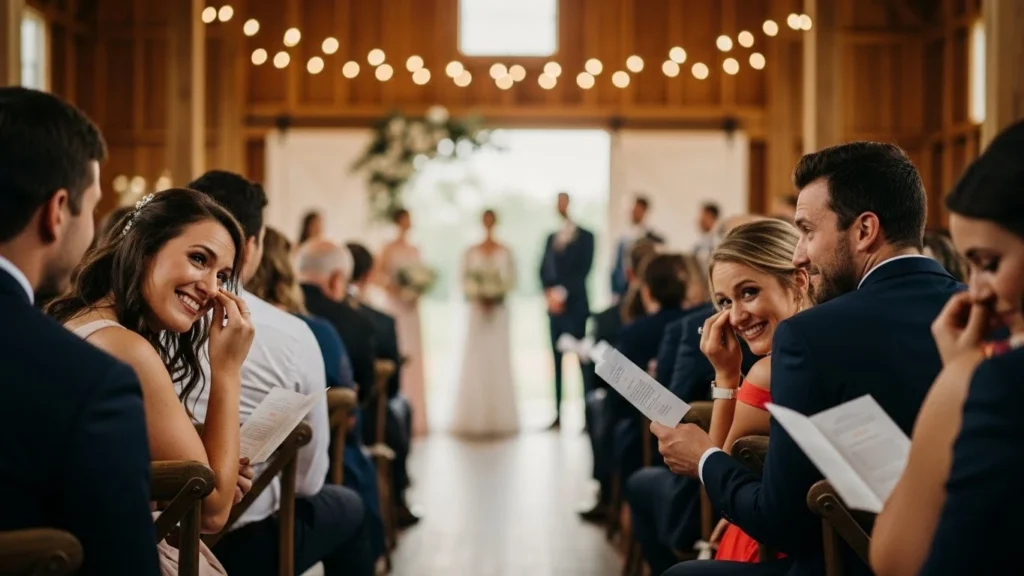
I was at a wedding last October where the ceremony was held in this stunning, historic library. It was the kind of place that looks incredible on Instagram, with floor to ceiling books and golden lighting. But about fifteen minutes in, I started noticing the “lean.” You know the one. It is when guests start shifting their weight from side to side, looking at their programs for the fifth time, or subtly checking their phones under their purses. The officiant was reading a very long, very dry history of marriage that felt like a college lecture. By the time the couple actually got to their vows, half the room had checked out.
It broke my heart for them. They had spent so much money and time on the “vibe” of the room, but they forgot to plan for the experience of the people in the seats. We often treat the ceremony like it is just the thing people have to sit through before the open bar starts. We think of it as a formality. But your guests are there because they love you. They want to be part of the moment, not just witnesses to it.
If you want your guests to walk away saying, “That was the most beautiful ceremony I’ve ever seen,” instead of “When is the cocktail hour starting?” you have to think about engagement. You have to treat the ceremony like a story you are telling together. Here is how you keep your guests leaning in instead of checking out.
1. The Thirty Minute Rule
I am going to be very honest with you. Unless you are having a high traditional religious ceremony that requires specific rites, your ceremony should not go over thirty minutes.
Most people have an attention span that starts to wander after about twenty minutes of sitting still. If you hit the forty five minute mark and you haven’t kissed yet, you are losing people. This doesn’t mean you have to rush through the important stuff. It just means you should cut out the “fluff.” If you have four different readings, pick your favorite two. If your officiant wants to give a twenty minute sermon, ask them to trim it down to ten. Keep the pace moving so that every word feels like it has a purpose.
2. Set the Stage Before the Processional
The guest experience starts the second they arrive at the venue, not when the music starts. If people are sitting in silence in a hot room for twenty minutes, they are going to be cranky before you even walk down the aisle.
Give them something to do or look at. Have a “Welcome” table with cold water or lemonade if it is summer. Provide a program that actually has some personality. Instead of just listing the order of events, add a “Fun Facts” section about your wedding party or a short “Thank You” note to your parents. If you want to get really creative, give them a small task, like a “Ring Warming” where they pass the rings around, or a stone they can hold to offer a silent blessing. When guests feel like they have a role, they stay focused.
3. Choose Your Officiant Wisely
The person leading the ceremony is the “host” of the event. If they are monotone, disorganized, or clearly reading from a generic script they haven’t looked at in years, the energy in the room will die.
If you are hiring a professional, make sure you watch videos of them in action. If you are asking a friend to do it, make sure it is someone who is comfortable public speaking and who actually knows your story. A great officiant will look at the guests, use their names, and tell a few jokes to break the ice. They should act as a bridge between you and the audience. When the officiant is engaging, the guests feel like they are being talked to, not talked at.
4. Personalize the Content (But Keep it Relatable)
People stay engaged when they feel an emotional connection to what is happening. Use the ceremony to tell your story, but make sure the guests can find themselves in it too.
Instead of general talk about the “sanctity of marriage,” have your officiant talk about how your friends were the ones who encouraged your first date. Mention your family traditions. When you talk about the life you are building, mention the community of people sitting in those chairs. When guests hear their own roles in your life acknowledged, they feel invested in the outcome of the ceremony. They aren’t just watching a wedding; they are supporting a couple they truly know.
5. Be Mindful of the Physical Environment
It is hard to stay engaged when you are physically miserable. If the sun is beating down on your guests’ faces, or if the chairs are so close together that everyone is bumping elbows, they are going to be distracted by their own discomfort.
- The Sight Lines: Can the person in the back row actually see you? If you are getting married on flat ground, consider a slightly raised platform.
- The Sound: This is the big one. If guests can’t hear your vows, they will stop listening. Invest in a good sound system and a microphone for your officiant and anyone doing a reading.
- The Temperature: If it is outdoors, provide fans or heaters. If people are shivering or sweating, they are counting down the seconds until they can leave.
6. Involve the Senses
A wedding ceremony is a very visual and auditory experience, but you can keep people engaged by involving other senses too.
Maybe you have a live musician playing a specific song that has a lot of energy. Maybe you use incense or heavy floral arrangements that make the air smell incredible. Some couples include a “Unity Ceremony” that has a visual “wow” factor, like a hand-fasting with colorful ribbons or even a shared cup of wine. These little “breaks” in the speaking parts give the guests something new to focus on and keep the rhythm of the ceremony from feeling repetitive.
7. The Power of Laughter
A lot of people think a wedding ceremony has to be perfectly serious from start to finish. But some of the most engaged ceremonies I’ve ever attended were the ones where the couple laughed.
If you fumble a word, laugh. If the ring won’t go on, make a joke. If the officiant tells a funny story about your first fight over where to go for dinner, let everyone enjoy it. Laughter releases tension. It makes everyone in the room feel like they are part of a real, human moment. When the mood is light and joyful, people want to stay in that moment for as long as possible.
8. The “Big Finish”
Just like a good book or a movie, the ending of your ceremony needs to have some punch. The recessional is the moment where the energy should peak.
Don’t just walk out to a slow, quiet song. Pick something celebratory and loud. Encourage your guests to cheer, clap, or even toss some petals as you walk by. When you end on a high note, that energy carries directly into the cocktail hour and sets the tone for the rest of the night. Your guests will leave the ceremony feeling energized and ready to party, rather than feeling like they just got out of a long meeting.
Final Thoughts
Keeping your guests engaged isn’t about being an entertainer. It is about being a good host. It is about remembering that while the day is about you, the experience is shared with everyone you invited.
When you plan with your guests’ comfort and interest in mind, you aren’t taking away from the “sacredness” of the day. You are actually honoring it. You are making sure that the promises you make are heard and felt by the people who matter most. Take the time to look at your ceremony through their eyes. If you do that, I promise you won’t see a single person checking their watch.
