

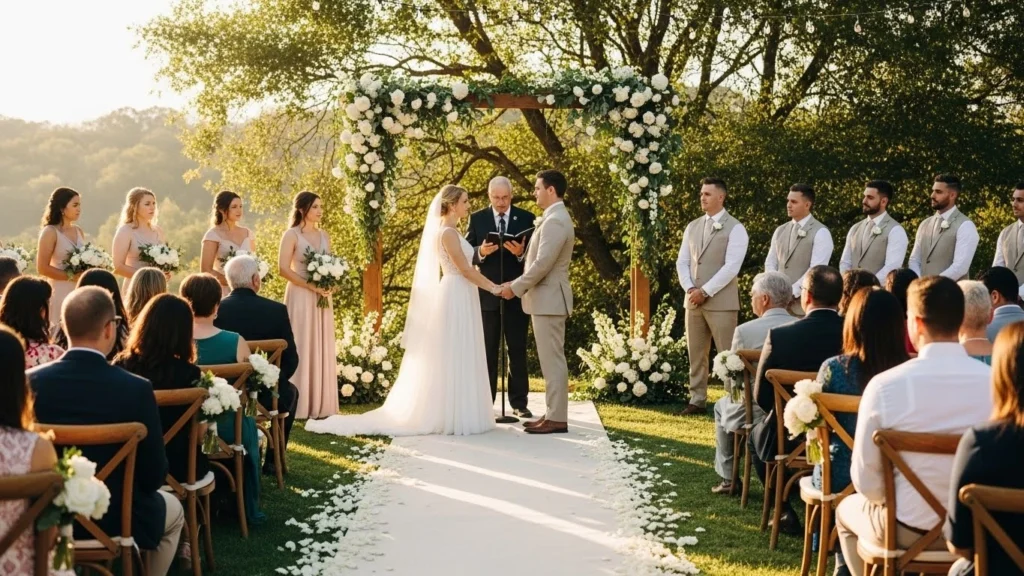
I was a bridesmaid in a wedding a few summers ago where the couple decided to wing the ceremony order. They were super chill people, and they figured everyone would just sort of know where to go. Well, five minutes before the start, the flower girl was crying, the groom realized he didn’t know which side to stand on, and the officiant was frantically Googling “basic wedding script” on his phone. It was a little chaotic, to say the least.
That day taught me that even the most laid back, non traditional couple needs a roadmap. The wedding ceremony is the actual reason everyone is there. It is the heart of the whole day. While the reception is the party, the ceremony is the promise. But if you have never planned a wedding before, trying to figure out who walks in when and what happens after the rings can feel like trying to assemble furniture without the manual.
The good news is that most American wedding ceremonies follow a very similar flow. Once you know the “skeleton” of the ceremony, you can add your own flavor, swap things out, or keep it strictly traditional. Here is a step by step breakdown of how a wedding ceremony actually works so you can stop stressing about the logistics and start focusing on the person at the end of the aisle.
1. The Prelude
This is the thirty minutes or so before the ceremony officially begins. Your guests are arriving, finding their seats, and probably whispering about how beautiful the flowers look.
During this time, you should have some background music playing. It sets the tone. If you want a classic vibe, go for strings. If you want something modern, maybe a soft acoustic version of your favorite songs. This is the “warm up” period. Your ushers should be helping people find seats, usually filling up the front rows first so the photos look full and lively.
2. The Processional
This is the big moment. The music changes, everyone stands up, and the wedding party makes their entrance. While the order can vary based on religious traditions, the most common American processional goes like this:
- The Officiant and the Groom: They usually enter from the side and take their places at the altar.
- The Grandparents and Parents: This is a sweet way to honor the family. They are escorted to their seats in the front row.
- The Wedding Party: The bridesmaids and groomsmen walk down the aisle, either in pairs or separately.
- The Ring Bearer and Flower Girl: The cuteness factor. They come right before the bride.
- The Bride: Usually escorted by her father, both parents, or even walking solo. This is the “stop and stare” moment.
3. The Opening Remarks
Once everyone is settled at the front, the officiant will usually say something like, “Please be seated.” They will then give a brief welcome to the guests. This is often where they talk about the meaning of marriage or share a little bit about your specific love story. It is a nice way to ground everyone and transition from the excitement of the walk to the solemnity of the vows.
4. The Readings
If you have friends or family members who aren’t in the wedding party but you still want to include them, this is their time to shine. You can choose a poem, a passage from a book, or a religious text. Most couples do one or two readings. It gives you a chance to catch your breath and actually look at your partner for a second while someone else is talking.
5. The Officiant’s Address
This is often called the “homily” or the “message.” The officiant talks more deeply about your relationship. If you picked a friend to marry you, this part is usually very personal and funny. If you have a religious leader, they might focus more on the spiritual side of the union. It usually lasts about five to ten minutes. You want it long enough to feel significant but short enough that your guests aren’t checking their watches.
6. The Vows
This is the “meat” of the ceremony. You have two main options here. You can go with the traditional “repeat after me” vows where the officiant says the lines and you follow along. Or, you can write your own personal vows.
If you write your own, my best advice is to keep them under three minutes. Share a memory, make a promise, and tell them why you love them. Have them written down on a card. Do not try to memorize them. Your brain will be at about ten percent capacity due to the adrenaline, so give yourself the safety net of a piece of paper.
7. The Ring Exchange
After the vows, you exchange rings. The officiant will usually ask the best man or the maid of honor for the rings. You’ll slide the ring onto your partner’s finger while saying a short phrase like, “With this ring, I wed thee.” It is a simple, physical symbol of the promises you just made.
8. The Unity Ceremony (Optional)
Many couples like to add a “unity” element here. This could be lighting a unity candle, pouring different colors of sand into one jar, or even tying a literal knot. Some modern couples are doing things like “planting a tree” or “sealing a wine box” to be opened on their fifth anniversary. It isn’t a requirement, but it is a nice visual way to represent two lives becoming one.
9. The Closing and The Big Kiss
The officiant will offer some final well wishes or a blessing. Then comes the part everyone waits for. The officiant will say, “By the power vested in me, I now pronounce you…” and tell you to kiss.
Pro tip: Make the kiss last at least three seconds. Your photographer needs a moment to catch the shot. If it’s too fast, you might end up with a blurry photo of your noses bumping.
10. The Recessional
The music kicks back up, usually something upbeat and celebratory this time. You and your new spouse head back up the aisle first, followed by the wedding party and then the parents. This is usually the moment of pure relief and joy. You did it. The “work” part of the day is over and the party is about to start.
A Few Little Things to Remember
- The “Which Side” Debate: Traditionally in the U.S., the bride stands on the left and the groom stands on the right when facing the altar. However, more and more couples are choosing whichever side they think is their “good side” for photos. It is your wedding, so stand wherever you want.
- The Marriage License: Don’t forget that you actually have to sign the legal paperwork! Some couples do this right at the altar, while others slip away to a private room immediately after the recessional to sign it with their witnesses.
- The Unplugged Factor: If you don’t want a sea of iPhones in your professional photos, have your officiant ask guests to put their phones away before the processional begins. People usually listen if they are told nicely at the very start.
Final Thoughts
Your ceremony can be ten minutes long or forty five minutes long. It can be in a cathedral or a cow pasture. The “order” is just a way to make sure the story you are telling has a beginning, a middle, and an end.
The most important thing is that it feels like you. If you want to skip the readings and do a group singalong instead, do it. If you want to walk down the aisle together, do it. As long as you end up married at the end of it, the ceremony was a success. Take a deep breath, hold your partner’s hands tight, and try to soak in every single word. It goes by faster than you think.
