

The moment you start looking at catering quotes or floral minimums, your brain naturally starts calculating how much you could save by doing it yourself. You imagine a Saturday morning spent arranging grocery store eucalyptus or your cousin running the soundboard with a Spotify playlist.
The problem is that most DIY plans are built on the assumption that your time is free and your stress levels are infinite. This article helps you weigh the true cost of DIY Wedding vs Hiring Pros (What Saves Money and What Usually Backfires) so you can spend your budget on the things that actually matter.
Choosing where to step back and where to lean on an expert is the only way to stay sane during the process. We are going to look at the specific categories where DIY works and where it usually falls apart.
The Reality of the DIY Discount
Most people think DIY is a straight path to a lower price tag. In reality, it is often just a trade-off between money and logistics. If you decide to provide your own alcohol, for example, you aren’t just paying for the bottles. You are paying for the transport, the ice, the cooling tubs, and the person who has to haul the leftovers away at midnight.
This is where most budgets quietly break. You spend $400 on supplies for a project that would have cost $600 to hire out, but you spend twenty hours of your life executing it. If those twenty hours happen during the final week of wedding prep, you will likely regret the $200 savings.
The key is to identify “low-stakes” DIY versus “high-stakes” DIY. Low-stakes tasks are things you can finish a month in advance. High-stakes tasks are things that must happen in the 24 hours leading up to the ceremony. If a project requires you to be awake and working at 10:00 PM the night before your wedding, it is almost always a bad idea.
Catering and Service: The Danger Zone
If there’s one thing to decide early, it’s this: do not try to DIY your own food. This is the most common mistake for couples trying to save five figures. Professional catering isn’t just about the cooking; it is about food safety, temperature control, and the massive amount of cleaning that happens behind the scenes.
I have seen “self-catered” weddings where the bride’s aunt spent the entire reception in the kitchen washing pans instead of watching the first dance. Even if you do a “drop-off” style meal from a local restaurant, you still need to hire professional servers or “day-of” assistants to manage the buffet and clear plates.
Without a professional crew, your guests become your staff. Someone has to empty the trash cans when they overflow and someone has to refill the water carafes. If you don’t hire pros for this, those tasks fall to your bridal party or your parents.
Florals and Decor: Where to Split the Difference
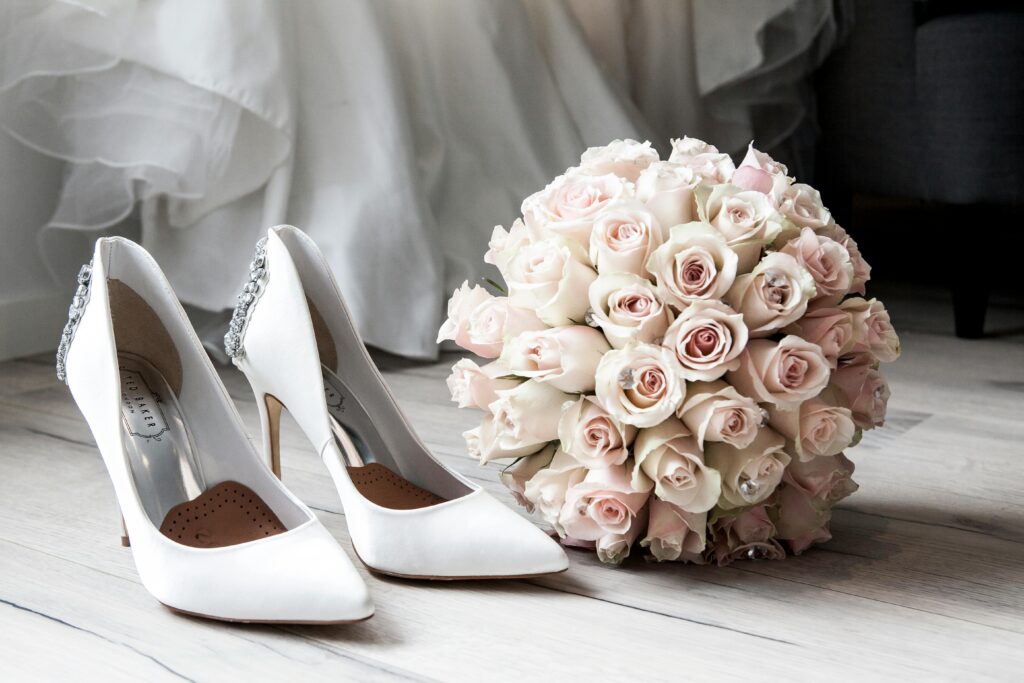
Flowers are a middle-ground category where you can actually save money if you are strategic. Hiring a florist for the “personal” items like bouquets and boutonnieres while doing your own centerpieces is a very common and effective strategy.
Professional florists have access to high-quality stems and, more importantly, industrial refrigeration. If you try to do your own bouquets, you are fighting a clock against wilting. However, non-floral centerpieces like candles, books, or dried greenery are perfect for DIY because you can box them up weeks in advance.
When Professional Expertise is Non-Negotiable
There are certain vendors whose value lies in their equipment and their ability to handle a crisis. You cannot DIY a photographer. A friend with a nice camera is still just a friend with a camera; they don’t have the backup gear, the lighting knowledge for a dark reception hall, or the experience to manage a cranky flower girl.
Similarly, a professional DJ or band does more than play music. They manage the flow of the evening and act as the Master of Ceremonies. A DIY playlist often leads to awkward silences, “dead” dance floors, and guests who have no idea when the cake cutting is happening because no one announced it.
Comparison of DIY vs. Professional Costs
The table below shows common ranges for a 100-guest wedding. Note that DIY “costs” include materials and rentals but do not account for your labor.
| Category | Professional Range | DIY Material Range | Risk Level |
| Photography | $3,000 – $7,000 | $0 (Don’t do it) | Extreme |
| Catering | $6,000 – $15,000 | $1,500 – $3,000 | High |
| Florals | $2,500 – $6,000 | $600 – $1,200 | Medium |
| DJ/Entertainment | $1,500 – $3,500 | $300 (Rental gear) | High |
| Coordination | $1,500 – $4,000 | $0 (The “Friend” route) | High |
| Stationery | $500 – $2,000 | $150 – $400 | Low |
The “Hidden Costs” Checklist
Before you commit to a DIY project, run through this list. If you check more than three boxes for a single project, you should probably hire a professional.
- Does this project require specialized tools I don’t own?
- Do I need to rent a vehicle to transport the finished product?
- Does this task have to be completed within 48 hours of the wedding?
- Will I need to find a place to store 100+ of these items in my house for months?
- Is there a specific person assigned to set this up who is not in the wedding party?
- If this fails, will it ruin the overall guest experience?
- Am I doing this because I enjoy it, or just because I’m scared of the quote?
Example Scenario: The $20,000 Budget Balance
Many couples land somewhere around a $20,000 budget for 80 guests. In this scenario, trying to “pro” every single category usually leads to going $5,000 over budget. Here is how a realistic split might look to keep costs down without losing quality.
The “Pro” Investments:
- Catering ($7,500): Full service, including two servers to handle cleanup.
- Photography ($3,500): 8 hours of coverage with a seasoned lead shooter.
- Partial Planning/Day-of Coordination ($1,800): To ensure DIY elements actually get set up.
- Professional DJ ($1,500): For sound quality and timeline management.
The “DIY” Savings:
- Alcohol ($800): Bought in bulk from a warehouse club (returns allowed on unopened bottles).
- Florals ($700): Professional bouquets, but DIY bud-vase centerpieces.
- Stationery ($300): Digital RSVPs and home-printed programs.
- Dessert ($400): A small cutting cake for the couple and a variety of high-end grocery store treats for guests.
In this example, the couple saved nearly $4,000 by DIY-ing the categories that didn’t require “live” performance or specialized safety skills.
Common Mistakes to Avoid
One major pitfall is the “Baking My Own Cake” trap. Unless you are a professional pastry chef, do not do this. A wedding cake needs to be structurally sound enough to sit at room temperature for hours and survive a car ride. Most home-baked cakes collapse or melt under those conditions.
Another frequent error is underestimating the “Rental Ripple Effect.” If you book a “blank space” venue to save money, you now have to rent every fork, knife, spoon, chair, and table. Often, the cost of these rentals plus the delivery fees ends up being more expensive than a mid-range all-inclusive hotel or restaurant.
Quick Decision Tip: If a DIY project takes more than five hours to complete and saves you less than $200, your time is being valued at less than $40 per hour. Most couples find that their time is worth much more than that in the final weeks of planning.
If You Are Stuck, Do This
If you are staring at a spreadsheet and can’t decide whether to DIY a specific category, use the Friday Test.
Imagine it is the Friday morning before your Saturday wedding. You have relatives arriving at the airport, your nails need to be done, and you’re supposed to be headed to the rehearsal lunch. If the thought of having to finish that specific DIY project in that moment makes you want to cry, do not DIY it.
Hiring a professional is often just buying yourself the right to be a guest at your own party. If you can’t afford a pro for a certain category, consider scaling back the complexity rather than trying to do a pro-level job yourself. Instead of 20 varieties of DIY appetizers, do one really great cheese and charcuterie board.
What to Do Next
- Audit your “Must-Haves”: Pick the two categories where quality is non-negotiable (usually food and photos).
- Get three quotes: Even if you think you’ll DIY, get professional quotes so you know exactly what that “saving” is worth.
- Appoint a DIY Captain: If you go the DIY route, find a trusted friend (not in the wedding party) to be the point person for that task on the wedding day.
- Buy your supplies early: If you are doing decor, have everything purchased and organized three months out.
A quick note on real-life planning
Every wedding is a unique ecosystem and what works for a backyard celebration might not work for a ballroom. These cost ranges and risk assessments are based on typical industry standards, but your local market and specific vendor availability will change the math. Use this as a framework to start your conversations rather than a rigid set of rules.
