

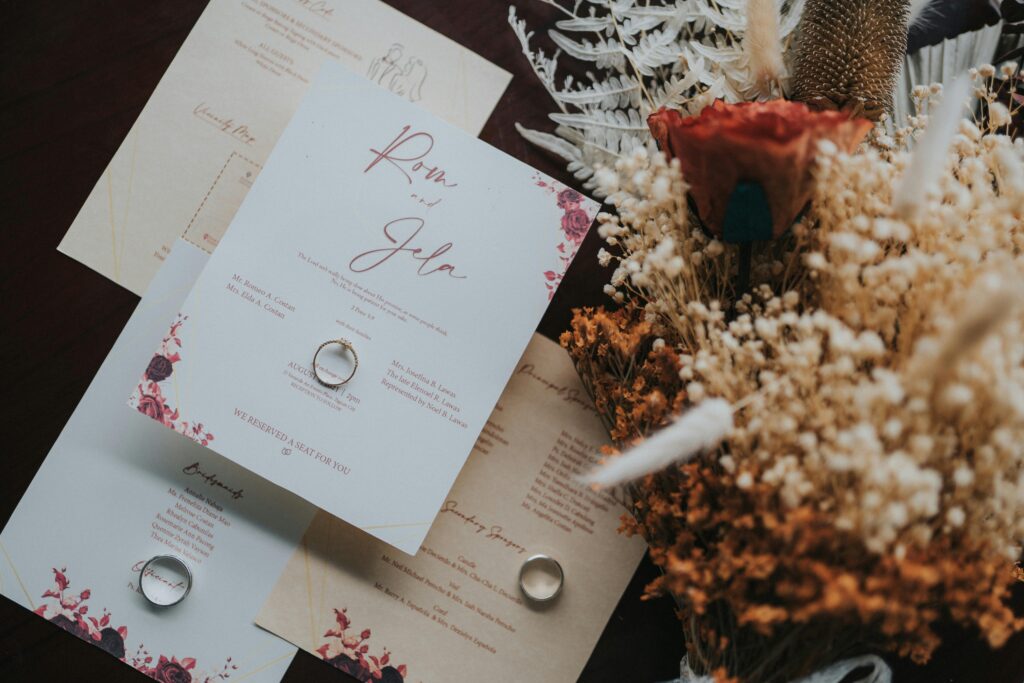
You are probably sitting at a kitchen table surrounded by half-finished guest lists and wondering if you actually need to send save-the-dates a full year in advance. Most couples start this process thinking about cardstock and calligraphy, only to realize the real challenge is the math of the calendar.
If you send them too early, people lose the information; too late, and your favorite aunt has already booked a cruise for that weekend. This Wedding Invitation Timeline (Save-the-Dates, Invites, RSVPs, and Follow-Ups) is designed to help you work backward from your wedding date to create a logical flow of information.
By setting these dates now, you prevent the panic of realizes you only gave your caterer three days to order the steak. A solid schedule keeps your guests informed and your guest count accurate without the last-minute scramble.
Establishing Your Foundation
Before you can pick a mailing date, you need a finalized guest list and a confirmed venue. It sounds obvious, but many couples try to order stationery before they have a firm grip on their headcount. This leads to over-ordering or, worse, running out of suites and paying a fortune for a tiny second print run.
If there is one thing to decide early, it is whether you are hosting a destination wedding or a local one. A destination event requires a much longer lead time because guests have to book flights and request time off work. For a local wedding, you have a bit more flexibility, but you still need to respect the schedules of out-of-town guests.
Most stationery designers require two to four months for custom work. If you are going the DIY or semi-custom route through an online platform, you can usually cut that down to three weeks. Factor this production time into your calendar so you aren’t rushing the assembly process.
The Save-the-Date Window
Save-the-dates are your first formal announcement. They don’t need to include the venue address or the start time, but they must have the city, state, and date. This is where most timelines start to stretch too far.
- Local Weddings: Aim for 6 to 8 months before the big day.
- Destination Weddings: Plan for 9 to 12 months.
Sending these out earlier than a year can actually be counterproductive. People tend to put them in a “later” pile and forget to check for updates on your wedding website. If you are getting married on a major holiday like New Year’s Eve or Labor Day, stick to the 12-month mark to ensure you are the first thing on their calendar.
Mailing the Formal Invitation
The formal invitation is the heavy lifter of your stationery suite. It carries the specific ceremony time, the reception location, and the RSVP instructions. A common mistake is sending these out too early because you are excited to see the response.
When invitations arrive three months before a wedding, guests often set them aside because they don’t know their schedule yet. Then the invite gets buried under mail, and you end up chasing down dozens of people for a response. The sweet spot for mailing invitations is 6 to 8 weeks before the wedding.
This window gives guests enough time to check their work schedules and find a babysitter, but it is close enough to the date that the event feels “real.” If you are hosting a destination wedding, move this up to 10 or 12 weeks.
Planning the RSVP Deadline
Your RSVP date is not about when you want to know who is coming. It is about when your vendors need a final headcount. Most caterers and venues require a “guaranteed minimum” or a final count 10 to 14 days before the event.
Setting your RSVP deadline 3 to 4 weeks before the wedding gives you a necessary buffer. You will inevitably have people who forget to respond, and you need a week to call them before you hand that final number to the caterer.
Common Mistakes
- Setting the RSVP date too close to the wedding: You will be too busy with last-minute details to chase down late responders.
- Forgetting to stamp the return envelopes: If you use physical RSVP cards, not providing a stamp is a surefire way to get late responses.
- Vague “Plus One” labels: Be specific on the envelope to avoid awkward conversations later.
Managing the Follow-Up Phase
The week after your RSVP deadline is often the most stressful part of the process. Even with the best intentions, about 10% to 20% of your guest list will likely miss the deadline. This is not a reflection of how much they care about you; people just get busy.
This is the time for a firm but polite nudge. A simple text or phone call is much more effective than a formal email. You can say something like, “We are finalizing our seating chart and want to make sure we have a spot for you. Can you let us know by tomorrow if you can make it?”
Once you have those final numbers, you can move into the production of “day-of” items like place cards, seating charts, and menus. Trying to print a seating chart before the RSVPs are in is a recipe for wasted money on reprints.
Sample Invitation Timeline
To visualize how this works, let’s look at a wedding scheduled for September 20th.
| Action Item | Recommended Date | Why it matters |
| Finalize Guest List | January 1st | Sets the budget and order quantity. |
| Mail Save-the-Dates | February 1st | Gives 7 months’ notice for travel. |
| Order Invitations | May 15th | Allows time for proofing and shipping. |
| Mail Invitations | July 25th | 8 weeks out is the gold standard. |
| RSVP Deadline | August 23rd | 4 weeks out gives you a buffer. |
| Chase Late Responses | August 24th – 30th | Gives you a final count for vendors. |
| Send Final Count | September 6th | Most caterers need 10-14 days. |
The Components of the Suite
Every piece of paper you put in that envelope serves a specific purpose. While modern weddings are leaning more toward digital RSVPs, the physical suite still has a job to do.
- The Main Invite: The who, what, where, and when.
- The Details Card: Information on hotel blocks, shuttle times, or the wedding website.
- The RSVP Card: Used for meal choices and attendance (if not doing this online).
If you are trying to stay under a certain budget, the details card is the first thing you should cut. Moving those logistics to a wedding website saves on printing and postage costs. It also allows you to update information in real-time if a hotel block fills up or a shuttle time changes.
Calculating Postage Costs
Standard envelopes are one price, but square envelopes or heavy, multi-layer invitations often require extra postage. Before you buy a hundred “Forever” stamps, take one fully assembled invitation to the post office and have them weigh it.
It is heartbreaking to mail out your beautiful invites only to have them all returned for “insufficient postage” two weeks later. This mistake can derail your entire timeline.
Handling Regrets and Additions
Occasionally, you will receive a “no” from a guest you really wanted there. If you have a “B-list” of guests you couldn’t initially fit, you can send them an invitation once space opens up. However, you must be careful with the timing.
Sending a B-list invitation two weeks before the wedding is a clear signal to the guest that they were a backup choice. If you plan to use a secondary list, send those invites out as soon as the first wave of “no” responses comes in, ideally no later than six weeks before the date.
Quick Decisions Box
- Digital vs. Paper RSVPs? Digital is faster and cheaper; paper is more formal and traditional.
- Registry info on the invite? Never. Put it on the website.
- Adults only? Address the envelope only to the people invited. Do not write “No kids” on the card.
- When to order? Order 10% more than you think you need for late additions and keepsakes.
The Post-Wedding Follow-Up
The timeline doesn’t actually end when you walk down the aisle. Thank-you notes are the final stage of the invitation cycle. While the old rule of thumb was “you have a year,” that is a myth that leads to a lot of hurt feelings.
A realistic and respectful range is three months. If you wait longer than that, people start to wonder if their gift was actually delivered. It is much easier to write five notes a day for a month than to try and tackle 150 in a single weekend.
Final Checklist for Mailing
- Verify the spelling of every guest’s name.
- Double-check the ceremony start time against the venue contract.
- Include the wedding website URL for travel details.
- Weigh a sample at the post office for correct postage.
- Hand-cancel the stamps if you want to avoid messy machine markings.
- Keep three full suites for your photographer to use in detail shots.
A Quick Note on Real-Life Planning
This framework is a guide based on standard industry practices, but every wedding is unique. Your specific venue might have a much earlier deadline for food choices, or your local post office might be slower than average. Use these ranges as a starting point and adjust based on your specific vendor contracts and the complexity of your guest list.
What to Do Next
If you are feeling overwhelmed, the best thing you can do right now is grab a calendar and mark your wedding date. Work backward four weeks and mark that as your “RSVP Deadline.” Then work back another four weeks and mark that as your “Mailing Date.” Seeing these two milestones on a calendar usually makes the rest of the stationery process feel much more manageable.
